Your nervous system doesn’t want to relax
I have a small issue with the way we talk about nervous system regulation online, because somewhere between neuroscience entering the wellness world and everyone collectively discovering the vagus nerve, we seem to have decided that the ultimate sign of health is being calm at all times.
Slow mornings, long exhales, yin yoga, magnesium, less stimulation, more rest, preferably while drinking something warm from a handmade ceramic cup.
And look, I love all of those things, but your nervous system wasn’t designed to be calm all the time.
Regulation isn't relaxation
Your nervous system is supposed to react to life, which means your heart rate should go up when you train, your attention should sharpen when something demands it, you should feel nervous before doing something that scares you and you should occasionally get so excited about something that sitting quietly and regulating yourself would frankly be a very strange response.
Activation isn’t automatically dysregulation.
The more interesting question is what happens after.
Can you come back down when the thing is over? Can you move from effort into rest, from excitement into quiet, from doing into doing absolutely nothing without immediately feeling like you should be doing something again?
Because regulation doesn’t necessary mean you need to stay in one perfectly balanced state. It’s about having range.
Do you really need another deep breath?
This took me a while to understand because yoga taught me the enormous value of stillness, while years of kickboxing taught me something that initially seemed like the complete opposite: sometimes the quickest way back into your body is not sitting cross-legged trying to observe your thoughts while secretly wondering how many minutes are left. Sometimes you need to move. There are days when meditation feels exactly right, and there are days when twenty minutes of sweating, shaking, jumping, lifting, flowing or hitting something is infinitely more useful than trying to breathe yourself into a state your body clearly isn’t interested in being in yet. The body often knows before the mind catches up, which is one of the reasons I like starting there.
Yoga gets much more interesting when it's not about the poses
Put yourself in a difficult pose and suddenly you have a tiny laboratory for observing your entire personality. Something becomes uncomfortable and within approximately three seconds the internal commentary begins.
I can’t do this.
Why is everyone else doing this?
Surely we’ve been here for five minutes.
Has she forgotten about us?
And while your thighs are shaking and your opinion of the teacher is deteriorating, you get the chance to notice what you actually do when things become uncomfortable.
Do you immediately get out? Push harder because your ego would rather lose a hamstring than admit defeat? Stop breathing? Get angry? Start comparing? Or can you stay curious for another moment?
That’s when yoga becomes interesting to me. Learning how you behave when you’re uncomfortable actually might change your life.
And then there's the breath
This is the rabbit hole I keep falling deeper into, because breathing is something we do roughly 20,000 times every day without thinking about it and yet, unlike most automatic processes in the body, we can also deliberately change it.
Yoga figured out a very long time ago that this mattered.
And pranayama was never simply take a deep breath and calm down. Different practices were used to energise, focus, balance, heat, cool and prepare the mind for meditation, which is considerably more interesting than the modern idea that every breathing exercise should leave you horizontal under a blanket.
Today, neuroscience gives us another language for exploring some of those same mechanisms, and I find that overlap endlessly fascinating.
Ancient people didn’t need to know the words parasympathetic nervous system to notice that changing the breath changed something. And understanding the physiology doesn’t somehow make the ancient practice less meaningful.
Do you really need to become a calm person?
Maybe this is the biggest misconception. The goal isn’t to transform yourself into a permanently serene human who meditates at sunrise, never gets overwhelmed and responds to irritating people with the emotional stability of a Buddhist monk. That sounds exhausting in its own way. I’d rather have options.
I want to know myself well enough to recognise what’s actually going on before immediately trying to fix it, and to have enough tools to know that what I need today might be completely different from what worked yesterday.
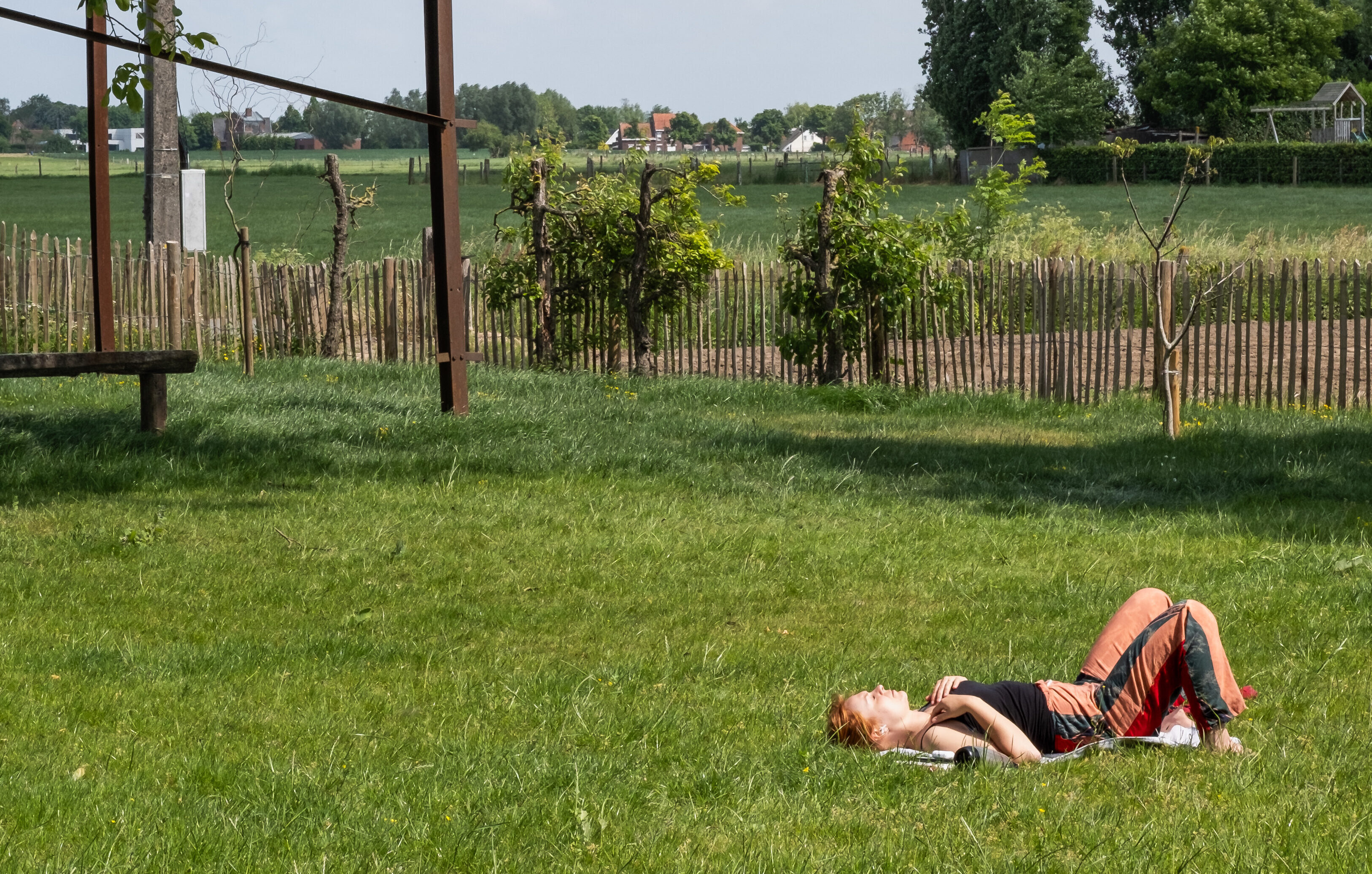
Sometimes that’s ten minutes of breathing, sometimes a strong yoga practice, sometimes lying on the floor doing absolutely nothing productive. It might be food, sleep, sunlight, calling someone you love, getting off your phone, or dancing until 4am and accepting that tomorrow’s contribution to nervous system health will mostly consist of horizontal activities.
Because there isn’t one perfectly regulated state we’re supposed to reach and somehow maintain while life keeps happening around us.
We have a body that reacts, a mind that interprets, a breath that changes with both — and maybe the practice is simply getting better at noticing all of it without needing to control every part.
Balance, then, becomes less about always finding the middle and more about knowing how to move between the edges.